
Restaurant Payment Systems Ireland: Table Service vs Counter Solutions
Choosing the right restaurant payment systems Ireland depends heavily on your service model and operational workflow. Whether you run a bustling quick-service café or an elegant table-service restaurant, your payment technology profoundly impacts customer experience, staff efficiency, and your bottom line. The distinction between table service and counter solutions isn’t merely about where transactions occur—it’s about fundamentally different approaches to managing orders, payments, and customer interactions.
Irish hospitality businesses increasingly recognise that generic point of sale systems rarely meet the specific demands of food service operations. According to Fáilte Ireland, the hospitality sector continues to evolve rapidly, with technology playing a crucial role in meeting customer expectations whilst managing costs effectively. Modern hospitality POSsystems designed specifically for restaurants offer features that streamline operations, reduce errors, and improve both staff and customer satisfaction.
This guide examines the key differences between table service and counter payment solutions, helping you identify which approach best suits your restaurant’s needs.
Understanding Restaurant Payment System Models
Before comparing specific solutions, it’s essential to understand the fundamental differences between service models.
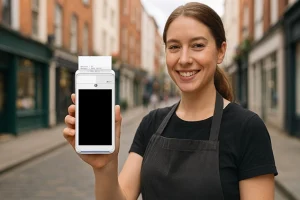
Table Service Payment Systems allow customers to dine at their table throughout their visit, with staff taking orders and bringing food to them. Modern restaurant payment systems Ireland enable waitstaff to take orders on handheld devices, send orders directly to the kitchen, and process payments tableside. This model prioritises customer comfort and creates opportunities for personalised service and upselling.
Counter Service Payment Solutions have customers order and pay before receiving their food. The payment system sits at the counter where staff take orders and process payments simultaneously. Counter solutions emphasise speed and throughput, processing high volumes of transactions quickly during peak periods.
Hybrid Models combine elements of both approaches. A café might offer counter service during busy breakfast hours but switch to table service for evening dining. Flexible hospitality POS systems accommodate these hybrid operations, allowing businesses to adapt their service model based on customer needs.
Table Service Payment Solutions: Key Features
Table service restaurants require payment systems that support complex workflows, multiple courses, and flexible payment options.
Mobile Order Taking and Payment
Handheld terminals or tablets allow servers to take orders and process payments directly at the table. This eliminates trips back and forth to a fixed terminal, reducing service time and increasing table turnover. Tableside payment processing particularly appeals to customers who appreciate efficiency and privacy.
Kitchen Integration
Quality restaurant payment systems Ireland for table service integrate seamlessly with kitchen display systems. When servers enter orders on their handheld devices, these immediately appear on screens in the kitchen, eliminating handwritten tickets and reducing order errors. This ensures faster service, fewer mistakes, and better communication between front and back of house.
Table Management
Table service solutions include features for managing dining room capacity. Visual table layouts show which tables are occupied, seated, or require attention. Staff can split bills between diners and transfer orders between tables if customers move—particularly valuable during busy service periods.
Advanced Tip Management
Table service systems need sophisticated tip management that accommodates tips added to card payments, cash tips, tip pooling arrangements, and different tip-out percentages. Modern systems from providers like Smartpos allow customers to add tips when paying by card, automatically track tip allocations, and generate reports for payroll purposes.
Counter Service Payment Solutions: Speed and Efficiency
Counter service operations prioritise transaction speed and straightforward workflows that keep queues moving during peak periods.
Fast Transaction Processing
Counter systems focus on completing transactions quickly. Large, clear displays show orders as staff build them, reducing errors. Quick-touch buttons for popular items allow staff to ring up common orders in seconds. Hospitality POS systems designed for counter service include features like saved favourites and meal deals with automatic pricing.
Kitchen Printer Integration
Counter solutions send orders to kitchen printers or display systems immediately upon payment. This ensures kitchen staff begin preparing orders whilst customers wait, reducing delays and ensuring smooth operations even when multiple staff members work the counter simultaneously.
Self-Service Options
Some counter-service establishments supplement traditional tills with self-service kiosks where customers place and pay for orders independently. These kiosks integrate with your main POS system, reducing queues whilst freeing staff to focus on food preparation and customer service.
Workflow Efficiency Comparison
The workflow efficiency of your payment system affects every aspect of daily operations.
Order Accuracy
Table service systems using handheld ordering devices significantly reduce errors compared to handwritten tickets. Counter systems benefit from clear visual displays and structured order-building interfaces that guide staff through the process, reducing mistakes during busy periods.
Staff Training Requirements
Counter systems generally require less extensive training than table service solutions. The fixed-location setup and linear workflow proves intuitive for new staff. Table service systems demand more comprehensive training covering table management, bill splitting, and mobile device handling. For detailed staff onboarding best practices, refer to our guide on EPOS training Ireland.
Peak Period Performance
Counter systems excel during peak periods when transaction speed determines customer wait times. Table service systems distribute work across multiple servers, preventing single-point bottlenecks but requiring adequate staffing levels to maintain service quality.
Tip Management Considerations
Tip handling represents one of the most significant operational differences between service models.
Table Service Tips
Table service establishments must accommodate tips added to card payments, cash tips left on tables, and varying tip amounts. Your payment system should allow customers to easily add tips when paying by card, track tips by server, and generate reports for payroll purposes. The Revenue Commissioners provide guidance on the tax treatment of tips that your payment system should help you manage correctly.
Counter Service Tips
Counter service tips typically involve jar-based cash collections or prompts on card terminals. These tips are often pooled and distributed equally among staff. Counter systems need simpler tip management functionality but should still track totals for payroll and tax purposes.
Integration Capabilities
Modern restaurant payment systems Ireland integrate with various business tools to create comprehensive management solutions.
Accounting Software
Integration with accounting platforms like Xero, Sage, or QuickBooks eliminates manual data entry and reduces errors. Your payment system should automatically sync sales data, tax information, and payment details—particularly valuable for VAT returns and financial reporting.
Inventory Management
Advanced systems track inventory automatically as items are sold. When a server orders a dish, the system deducts ingredients from inventory, alerts management when stock runs low, and provides data for menu engineering and cost analysis.
Online Ordering
Your payment system should integrate with online ordering platforms, ensuring online orders flow seamlessly into your kitchen alongside dine-in orders. Unified systems prevent the chaos of managing separate processes for different order sources.
Providers like easyPayments offer multi-location management features that allow restaurant groups to maintain consistency whilst accommodating location-specific requirements.
Cost Considerations
Understanding the cost implications of different restaurant payment systems Ireland helps you make informed decisions aligned with your budget.
Hardware Investment
Counter service systems typically require fixed terminals, customer-facing displays, and kitchen printers, with initial costs ranging from €1,000 to €5,000. Table service solutions require handheld devices (€300-€600 each) for servers and kitchen display systems, often running higher due to multiple devices.
Software Fees
Most modern systems operate on subscription models with monthly fees ranging from €50-€200 for basic counter systems and €100-€400 for comprehensive table service solutions. Some providers like New Payment Innovation offer all-inclusive packages that bundle hardware, software, training, and support.
Transaction Fees
Payment processing fees apply to card transactions, typically ranging from 1.5% to 3% per transaction plus a fixed fee. Review our card machine comparison guide for detailed information on payment processing costs.
Return on Investment
Table service systems deliver returns through increased table turnover, higher average bills due to easier upselling, and improved customer satisfaction. Counter systems generate ROI primarily through labour efficiency—processing more transactions with fewer staff during peak periods.
Making Your Decision
Selecting the right system requires honest assessment of your operational model and priorities. Consider your primary service model, customer expectations, staff preferences, and growth plans. Cloud-based solutions with multi-location support provide flexibility for expansion.
Fine dining patrons expect sophisticated tableside service, whilst café customers prioritise speed. Understanding customer expectations helps you select systems that enhance their experience and support your business model.
Finding the Perfect Payment Solution
Selecting the right restaurant payment systems Ireland dramatically impacts your operational efficiency, staff satisfaction, and customer experience. Whether table service, counter service, or hybrid operations suit your business best, modern hospitality POS systems offer sophisticated features that transform how you manage your restaurant.
The investment in appropriate payment technology delivers returns through faster service, fewer errors, better tip management, and comprehensive integration with other business systems.
Get Expert Guidance on Restaurant Payment Systems
At Compayre, we specialise in helping Irish hospitality businesses compare payment systems and find solutions perfectly matched to their operational requirements. Our independent comparison service evaluates providers based on features, pricing, integration capabilities, and the specific needs of table service versus counter service operations.
We understand that restaurants require more than generic POS systems—you need solutions designed specifically for hospitality that handle complex orders, tip management, kitchen integration, and the unique workflows of food service businesses.
Ready to find the ideal payment system for your restaurant? Visit compayre.ie or call us on +353 1 265 4403 to speak with our team. We’ll help you compare restaurant payment systems Ireland providers and secure a solution that improves efficiency, enhances customer service, and grows with your business.