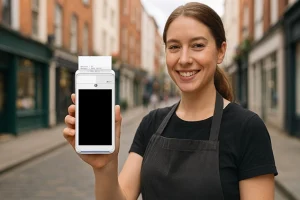

The shift from chip and PIN to contactless payment Ireland represents one of the most significant changes in how Irish consumers pay for goods and services. What began as a novelty for small purchases has evolved into the dominant payment method for transactions under €50, fundamentally changing queue dynamics, customer expectations, and operational considerations for Irish businesses. Understanding the practical differences between contactless and chip and PIN transactions—including processing times, associated costs, and customer preferences—helps businesses optimise checkout experiences whilst managing payment processing expenses effectively.
The adoption of contactless payments accelerated dramatically during recent years, driven by convenience, hygiene concerns, and increasing transaction limits. According to the Central Bank of Ireland, contactless payments now account for the majority of in-person card transactions in Ireland, with the €50 contactless limit introduced in 2023 significantly expanding usage scenarios.
This guide compares chip and PIN versus contactless payment methods, focusing on processing times and their operational impact, customer preferences shaping payment method adoption, and fee differences affecting your payment processing costs.
Understanding Payment Technologies
Before comparing these payment methods, understanding how each technology works provides essential context.
Chip and PIN Technology
Chip and PIN payments use EMV chip technology embedded in payment cards. When customers insert cards into terminals, the chip communicates with the payment processor through encrypted data exchange. Customers then verify the transaction by entering their Personal Identification Number (PIN), providing two-factor authentication—possession of the card plus knowledge of the PIN.
This technology, whilst more secure than older magnetic stripe cards, requires physical card insertion and PIN entry, creating longer transaction times than contactless alternatives.
Contactless Technology
Contactless payments use Near Field Communication (NFC) technology allowing cards or mobile devices to communicate with payment terminals wirelessly over short distances (typically under 4cm). Customers simply tap their card or mobile device against the terminal, with the transaction authenticating through the chip without requiring PIN entry for purchases under €50.
Mobile wallets including Apple Pay, Google Pay, and Samsung Pay use the same NFC technology, with additional security through biometric authentication (fingerprint or facial recognition) on the mobile device itself.
Strong Customer Authentication
Under PSD2 regulations, payment systems must implement Strong Customer Authentication for most electronic payments. Contactless transactions benefit from an exemption for low-value payments (under €50), though after several contactless transactions or when cumulative spending exceeds €150, terminals may require PIN entry even for contactless-capable cards.
Transaction Processing Time Comparison
Processing speed significantly affects customer experience, queue lengths, and operational efficiency.
Chip and PIN Transaction Times
Typical chip and PIN transactions require 30-60 seconds from card insertion to receipt printing. This timeline breaks down as card insertion (2-3 seconds), chip authentication and data exchange (8-15 seconds), customer PIN entry (10-20 seconds depending on customer speed), final authorisation (5-10 seconds), and receipt printing if requested (5-10 seconds).
These times increase when customers struggle to locate the correct card reader slot, misremember their PIN requiring multiple attempts, or experience delays in PIN entry.
Contactless Transaction Times
Contactless transactions complete dramatically faster, typically requiring just 10-20 seconds from tap to receipt. The simplified process involves customer tapping card or mobile device (1-2 seconds), terminal reading card data and authenticating (5-10 seconds), transaction approval (2-5 seconds), and receipt printing if requested (5-10 seconds).
The absence of card insertion and PIN entry eliminates the slowest portions of chip and PIN transactions, delivering 50-70% faster processing.
Real-World Impact
The time difference becomes substantial across multiple transactions. A busy café serving 300 customers during morning rush using chip and PIN at 45 seconds average spends 225 minutes (3.75 hours) processing payments. Switching to contactless at 15 seconds average reduces this to 75 minutes (1.25 hours)—saving 2.5 hours of processing time.
This efficiency directly translates to shorter queues, faster customer throughput, and better service during peak periods.
Staff Efficiency
Faster transactions allow staff to serve more customers per hour, potentially reducing staffing requirements during peak periods or enabling staff to focus on other customer service activities. For small businesses operating with minimal staff, these efficiency gains prove particularly valuable.
Customer Preference Analysis
Understanding what customers prefer helps businesses optimise payment options and checkout experiences.
Contactless Adoption Rates
Irish consumers have embraced contactless payments enthusiastically. Industry data suggests contactless now accounts for 70-80% of in-person card transactions under €50, with adoption continuing to grow. Younger demographics (under 45) use contactless for nearly all eligible purchases, whilst older demographics show increasing adoption though some maintain preference for chip and PIN.
Mobile wallet adoption grows steadily, with approximately 30-40% of smartphone users having Apple Pay, Google Pay, or equivalent configured.
Reasons for Contactless Preference
Customers cite several reasons for preferring contactless: speed and convenience requiring minimal interaction, hygiene benefits avoiding touching PIN pads, simplicity eliminating PIN memorisation requirements, and seamless experience particularly with mobile wallets and biometric authentication.
The convenience factor proves particularly compelling—once customers experience contactless ease, reverting to chip and PIN feels cumbersome and slow.
Situations Favouring Chip and PIN
Some customers and scenarios still favour chip and PIN. Higher-value transactions exceeding €50 contactless limit require chip and PIN. Security-conscious customers prefer PIN authentication’s explicit verification. Technical issues including NFC malfunction, battery-depleted mobile devices, or customer unfamiliarity with contactless technology may necessitate chip and PIN.
Businesses should maintain capability for both methods, as customer preference and transaction circumstances vary.
Generational Differences
Payment method preferences show clear generational patterns. Younger customers (18-35) overwhelmingly prefer contactless and mobile wallets, middle-aged customers (36-55) increasingly adopt contactless whilst maintaining chip and PIN capability, and older customers (55+) show growing contactless adoption but higher chip and PIN usage rates.
These patterns suggest contactless dominance will continue increasing as digital-native generations comprise larger proportions of the customer base.
Fee Structure Comparison
Understanding whether contactless and chip and PIN transactions carry different costs affects your payment processing economics.
Transaction Fee Components
Payment processing fees comprise several elements: interchange fees paid to card-issuing banks (typically 0.2-0.3% for debit cards, 0.3-1.5% for credit cards), scheme fees paid to Visa/Mastercard (typically 0.1-0.3%), and acquirer/processor margins (typically 0.3-1%).
These fees combine to create total processing costs usually ranging from 1.5-3% per transaction for Irish businesses.
Do Contactless Transactions Cost More?
Generally, contactless and chip and PIN transactions carry identical fees for the same card type. The payment method (contactless vs chip and PIN) doesn’t affect interchange rates—what matters is the card type (debit vs credit, consumer vs commercial) and transaction characteristics.
Some processors historically charged premium fees for contactless-capable terminals, but these practices have largely disappeared as contactless became standard. Verify your processor doesn’t include contactless-specific charges.
Mobile Wallet Considerations
Mobile wallet transactions (Apple Pay, Google Pay) process through the same card networks as physical card contactless payments, attracting identical interchange and scheme fees. Verify your payment provider supports mobile wallets without additional per-transaction fees beyond standard card processing costs.
Terminal and Equipment Costs
Contactless-capable terminals cost slightly more than basic chip and PIN terminals—typically €150-€400 for contactless-capable devices versus €100-€300 for chip-and-PIN-only devices. However, contactless capability has become standard, with chip-and-PIN-only terminals increasingly difficult to source.
For businesses comparing wireless versus wired terminals, contactless capability is typically standard regardless of connectivity type.
Long-Term Cost Considerations
Contactless payments’ operational efficiencies create indirect cost savings through faster customer throughput potentially reducing peak-period staffing needs, shorter queues improving customer satisfaction and retention, and reduced cash handling if contactless encourages card usage over cash.
These operational benefits often exceed any marginal equipment cost differences, making contactless economically attractive beyond just customer preference.
Operational Implications for Different Business Types
How contactless versus chip and PIN affects operations varies by business model.
Quick-Service Restaurants and Cafés
Speed proves critical for quick-service venues serving high customer volumes during peak periods. Contactless payments’ 50-70% faster processing dramatically improves throughput, reducing queue lengths during morning rush or lunch periods.
For restaurants considering payment systems, encouraging contactless adoption through clear signage and terminal positioning optimises efficiency.
Retail Stores
Retail environments benefit from contactless speed during peak shopping periods whilst appreciating chip and PIN availability for higher-value purchases. Clear contactless limit signage helps customers understand which payment method suits their purchase amount.
Table Service Restaurants
Table service venues using portable wireless terminals appreciate contactless speed when processing payments at tables. The faster transaction allows servers to move to their next table more quickly, improving table turnover during busy service. However, higher average bills often exceed contactless limits, requiring chip and PIN capabilities.
Mobile and Field Services
Businesses operating mobile services (deliveries, home services, market stalls) particularly appreciate contactless speed and simplicity. Faster transactions mean less time at each customer location, enabling more jobs per day.
Security Considerations
Security affects both customer confidence and business liability for fraudulent transactions.
Contactless Security Features
Despite initial concerns, contactless payments incorporate robust security measures. Tokenisation replaces actual card numbers with unique tokens for each transaction. Transaction limits (€50) restrict potential fraud exposure. Cumulative spending limits and periodic PIN requirements after multiple contactless uses prevent unlimited fraudulent spending. The card remains in customer possession throughout transaction, reducing theft opportunities.
Chip and PIN Security
Chip and PIN’s two-factor authentication (card possession plus PIN knowledge) provides strong security for higher-value transactions. EMV chip technology proves vastly more secure than older magnetic stripe cards, whilst PIN entry verification ensures the person using the card possesses authorisation knowledge.
Fraud Liability
Under payment regulations Ireland, merchants face limited liability for contactless fraud on properly authenticated transactions. However, businesses must use certified terminals, follow proper procedures, and maintain PCI compliance to ensure fraud liability protection.
Optimising Payment Method Mix
Strategic approaches maximise benefits of both payment technologies.
Encouraging Contactless Adoption
Businesses benefit from promoting contactless usage through clear signage indicating contactless acceptance and limits, terminal positioning making contactless area easily accessible, staff training to suggest contactless for eligible transactions, and visible contactless symbols at checkout.
However, avoid pressuring customers preferring chip and PIN, as payment method choice remains personal preference.
Maintaining Chip and PIN Capability
Despite contactless advantages, maintaining excellent chip and PIN capability ensures you accommodate all customers and transaction types. Ensure PIN pads remain clean and responsive, clearly indicate where to insert cards, and train staff to assist customers experiencing difficulties.
Staff Training Importance
Comprehensive staff training ensures your team can efficiently process both contactless and chip and PIN transactions, troubleshoot common issues, and assist customers unfamiliar with payment technologies.
Peak Period Management
Payment method efficiency particularly matters during high-volume trading periods. During peak trading periods including Black Friday and Christmas shopping, contactless speed significantly reduces queue lengths and customer frustration.
Consider adding temporary payment terminals during peak seasons, positioned for contactless-primary usage to maximise throughput.
Making Your Payment Method Decision
Most businesses benefit from fully supporting both contactless and chip and PIN, given different customer preferences and transaction scenarios.
Equipment Selection
When selecting payment terminals, ensure robust contactless capability with reliable NFC readers, support for mobile wallets (Apple Pay, Google Pay, Samsung Pay), and excellent chip and PIN functionality for transactions exceeding contactless limits.
Cost-Benefit Analysis
Calculate efficiency gains from contactless adoption: estimate percentage of transactions under €50 (contactless-eligible), multiply time savings per transaction by daily transaction count, and value staff time saved at your labour rates. For many businesses, operational efficiency gains justify any marginal equipment cost increases.
Maximising Payment Efficiency
Understanding the practical differences between chip and PIN and contactless payment Ireland helps businesses optimise checkout experiences, reduce queue times, and meet customer expectations. Whilst contactless delivers superior speed and customer preference for eligible transactions, maintaining excellent chip and PIN capability ensures you accommodate all customers and transaction scenarios.
Get Expert Payment Technology Guidance
At Compayre, we help Irish businesses select payment terminals and processors optimising transaction speed whilst managing costs effectively. Our independent comparison service evaluates providers based on contactless and chip and PIN processing capabilities, transaction fee structures, equipment quality, and customer support.
We understand that payment technology affects daily operations, customer satisfaction, and profitability.
Ready to optimise your payment processing? Visit compayre.ie or call us on +353 1 265 4403 to discuss your requirements. We’ll help you compare payment solutions ensuring fast, cost-effective processing for contactless payment Ireland and chip and PIN transactions serving your Irish business needs.