Understanding QR payments Ireland opportunities determines whether your business adopts convenient, low-cost payment technology meeting modern customer expectations or misses opportunities for faster checkout, reduced transaction fees, and streamlined operations through scan to pay solutions gaining traction across Irish retail, hospitality, and service sectors. Whether you operate a café in Dublin, run a market stall in Cork, manage a restaurant in Galway, or own a service business in Limerick, your awareness of QR code checkout benefits and limitations affects payment costs, customer experience, operational efficiency, and competitive positioning. Irish businesses implementing scan to pay Ireland solutions reduce payment processing costs by 40-60%, speed up checkout times by 30-50%, and eliminate physical terminal requirements whilst navigating customer adoption challenges and ensuring secure transaction processing.
The emergence of QR payments Ireland creates opportunities many business owners explore as alternative to traditional card terminals through smartphone-based payment acceptance, lower transaction fees, instant setup without hardware investment, and contactless payment experiences customers increasingly expect post-pandemic. According to industry trends, European QR code payment adoption accelerated dramatically with contactless preference growth, mobile wallet expansion, and younger consumer comfort with smartphone-based transactions. Successful businesses evaluate scan to pay solutions understanding QR code generation methods, customer adoption factors, cost comparisons versus traditional processing, security features protecting transactions, and specific use cases where QR payments Ireland excel determining whether technology fits their business model and customer base.
This guide explores QR payments Ireland in the Irish market, examining how scan to pay Ireland works, comparing costs and benefits, addressing security considerations, and identifying businesses where QR code checkout makes most sense alongside potential drawbacks requiring consideration.
How QR Payments Ireland Actually Work
Before adopting QR payment technology, understanding the basic process helps evaluate whether QR payments Ireland fit your business needs.
The Customer Experience
QR code checkout creates simple payment flow for customers with smartphones:
Step 1: Customer ready to pay
- Receives bill or sees QR code displayed at checkout
- Opens banking app or payment app on smartphone
- Some phones allow scanning directly from camera app
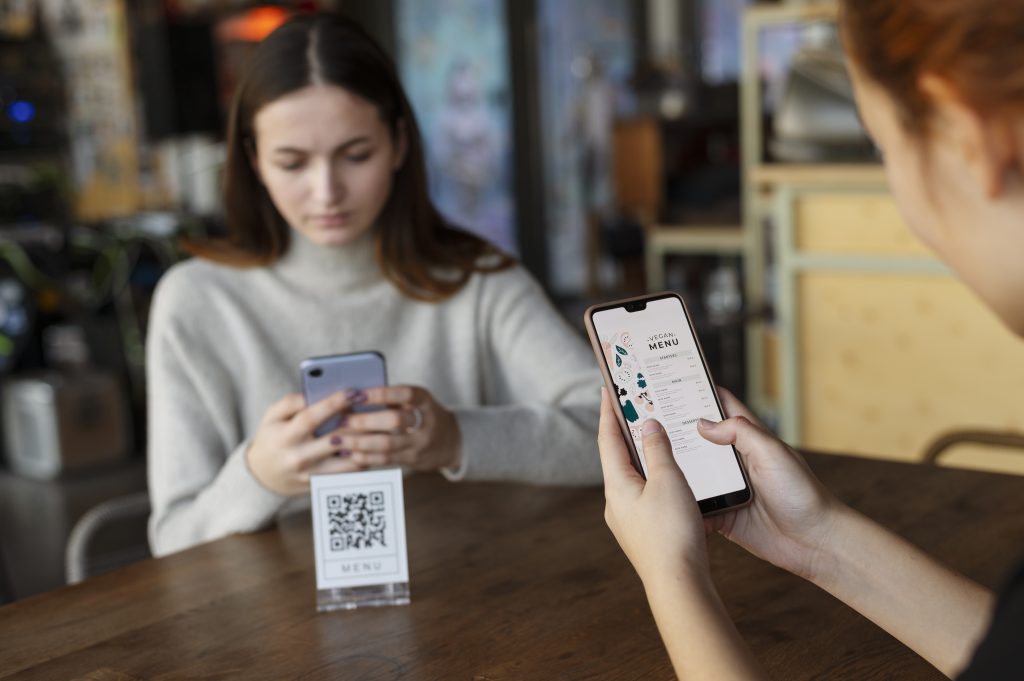
Step 2: Scan the code
- Points phone camera at QR code displayed on table tent, screen, or printed receipt
- Phone automatically recognizes QR payment code
- Payment app opens with transaction details pre-filled
Step 3: Confirm and pay
- Sees merchant name, amount, and payment details
- Confirms payment with Face ID, fingerprint, or PIN
- Receives instant confirmation on phone screen
Step 4: Done
- No physical card needed
- No terminal interaction required
- Digital receipt stored in app
- Walk away immediately
Total time: 10-20 seconds from scan to confirmation—faster than card chip reading or contactless tap in many cases for QR payments Ireland transactions.
The Merchant Experience
Running QR payments Ireland is simpler than traditional terminals for Irish businesses:
Setup (one-time):
- Sign up with QR payment provider online (10-30 minutes)
- Verify business details and bank account
- Generate QR codes for payment acceptance
- Print codes or display digitally
Daily operations:
- Display QR code at checkout, on tables, or on invoices
- Customer scans and pays directly
- Receive instant notification of successful payment
- Funds settle to bank account (typically 1-3 business days)
No hardware required:
- No card terminal to buy or lease
- No PIN pad maintenance
- No printer for receipts (digital only)
- Just smartphone/tablet to monitor payments
The simplicity particularly appeals to small businesses, market vendors, and service providers wanting payment acceptance without terminal investment through QR payments Ireland solutions.
Types of QR Payment Systems
Different QR payment approaches suit different business needs:
Static QR codes (simplest):
- Single QR code works for all transactions
- Customer scans then manually enters payment amount
- Best for: Tips, donations, informal sales
- Limitation: No automatic amount entry
Dynamic QR codes (most common):
- Unique QR code generated for each transaction with amount embedded
- Customer scans, sees pre-filled amount, and confirms
- Best for: Retail, restaurants, professional services
- Benefit: Eliminates amount entry errors
Table QR codes (hospitality):
- Permanent QR code at each restaurant table
- Customer scans, selects items from menu, pays
- Order goes directly to kitchen
- Best for: Restaurants, pubs, cafés
- Benefit: Combines ordering and payment
Invoice QR codes:
- QR code printed on invoices
- Customer pays bill by scanning invoice
- Best for: Professional services, utilities, subscriptions
- Benefit: Simplifies bill payment process
Most Irish businesses using QR payments Ireland adopt dynamic QR codes generating unique code per transaction ensuring correct amount capture.
Cost Comparison: QR Payments Ireland vs Traditional Card Payments
Understanding true cost differences helps evaluate whether QR payments Ireland save money for your business compared to traditional processing.
Traditional Card Payment Costs
Standard card terminal processing in Ireland typically costs:
Transaction fees:
- Debit cards: 0.3-0.8% + €0.05-€0.15 per transaction
- Credit cards: 1.2-2.5% + €0.10-€0.20 per transaction
- Average blended rate: 1.5-2.0% for typical business
Equipment costs:
- Card terminal purchase: €150-€400 upfront
- Card terminal lease: €20-€40 monthly (€240-€480 annually)
- Terminal replacement every 3-5 years
Other fees:
- Monthly account fee: €10-€25
- PCI compliance fee: €50-€200 annually
- Chargeback fees: €10-€25 per dispute
Example monthly cost for €10,000 sales:
- Transaction fees (1.75% average): €175
- Terminal lease: €30
- Monthly account fee: €15
- Total: €220 monthly (2.2% effective rate)
QR Payments Ireland Costs
Scan to pay solutions typically cost significantly less than traditional processing:
Transaction fees:
- Most QR providers: 0.5-1.2% flat rate
- No separate debit/credit pricing
- No per-transaction fixed fee in most cases
- Average: 0.8-1.0% for Irish QR providers
Equipment costs:
- Hardware required: €0 (use existing smartphone/tablet)
- QR code printing: €5-€20 one-time for printed codes
- Digital display: €0 (show QR on screen)
Other fees:
- Monthly account fee: Often €0
- Setup fee: Usually €0
- PCI compliance: Included (customer enters payment on their device)
- Chargeback fees: €5-€15 per dispute (lower than card terminals)
Example monthly cost for €10,000 sales:
- Transaction fees (0.9% average): €90
- Hardware: €0
- Monthly fee: €0
- Total: €90 monthly (0.9% effective rate)
Savings Calculation with QR Payments Ireland
Monthly savings on €10,000 sales:
- Traditional cards: €220
- QR payments Ireland: €90
- Savings: €130 monthly (59% reduction)
Annual savings: €1,560
The cost advantage of QR payments Ireland increases for businesses with:
- Higher transaction volumes (percentage savings multiply)
- Lower average transaction values (avoiding fixed per-transaction fees)
- Multiple payment locations (no terminals to buy for each location)
Cost Comparison Table
| Cost Element | Traditional Cards | QR Payments Ireland | Savings |
|---|---|---|---|
| Transaction fee rate | 1.5-2.0% | 0.8-1.2% | 40-60% lower |
| Per-transaction fee | €0.05-€0.20 | Usually €0 | 100% savings |
| Hardware cost | €150-€400 upfront or €20-€40/month | €0 | 100% savings |
| Monthly account fee | €10-€25 | Often €0 | €120-€300/year |
| Setup complexity | Terminal setup, training | 10-minute signup | Faster launch |
| PCI compliance | €50-€200/year | Included | €50-€200/year |
Bottom line: QR payments Ireland typically cost 40-60% less than traditional card terminals for most Irish businesses.
Customer Adoption: Will Your Customers Use QR Payments Ireland?
Cost savings don’t matter if customers won’t scan. Understanding adoption factors determines QR payments Ireland viability for your specific business.
Who Uses QR Payments Today?
High adoption demographics:
- Age 18-45: Smartphone-native generation comfortable with mobile payments
- Urban customers: Greater exposure to digital payment options
- Tech-savvy consumers: Early adopters of new payment technology
- Asian customers: QR payments dominant in China, widespread in Asia
- Tourists: Often use QR payments in home countries
Lower adoption demographics:
- Age 65+: May prefer physical cards or cash
- Rural customers: Less exposure to QR payment options
- Non-smartphone users: Small but declining segment
- Privacy-concerned customers: Prefer not using personal devices for payments
Irish adoption reality: Approximately 60-75% of Irish consumers aged 18-65 actively use smartphone for financial activities creating viable adoption base for QR payments Ireland, though not universal acceptance yet.
Factors Affecting Customer Acceptance
What increases QR adoption:
- Clear signage explaining “Scan to Pay with Banking App”
- Multiple payment options (QR + cards + cash) reducing pressure
- Staff mentioning QR option: “You can scan this QR code or use card”
- Incentives like “Save €0.50 by paying with QR”
- High-visibility QR placement at checkout
- Popular banking apps supporting QR payments
What reduces QR adoption:
- QR-only payment (eliminating alternatives frustrates non-users)
- Poor WiFi/mobile signal preventing app use
- Complicated instructions or multi-step processes
- Unfamiliar QR payment brands
- Small QR codes difficult to scan
- No staff guidance for first-time users
Practical adoption rates Irish businesses report for QR payments Ireland:
- Urban café offering QR + cards: 30-40% customers choose QR
- Restaurant with table QR ordering: 50-60% adoption
- Market stall offering QR + cash: 20-30% choose QR
- Professional service sending QR invoices: 40-50% pay via QR
Most businesses achieve 30-50% adoption when QR payments Ireland are offered alongside traditional payment methods.
Adoption Strategies That Work
1. Offer choice, don’t force QR: “We accept card, cash, or scan-to-pay” works better than “QR code only”
2. Make QR visible and obvious:
- Table tents in restaurants
- Counter displays at checkout
- Printed on receipts/invoices
- Displayed on payment screen
3. Explain benefits to customers:
- “Fastest way to pay”
- “No need to get your card out”
- “Instant digital receipt”
4. Train staff to suggest QR: “Would you like to pay by card or scan with your phone?” normalizes option
5. Start with enthusiastic early adopters: Young, urban, tech-savvy customers adopt first, then broader acceptance follows
Reality check: Don’t expect 100% adoption. QR payments Ireland work best alongside traditional options, not replacing them entirely (at least for next 3-5 years in Ireland).
Security Features: Are QR Payments Ireland Safe?
Security concerns affect both businesses and customers considering QR payments Ireland adoption.
How QR Payments Stay Secure
Customer device authentication:
- Payment requires unlocking customer’s banking app
- Face ID, fingerprint, or PIN verification
- Two-factor authentication for transactions
- Customer controls payment approval
Encrypted payment data:
- QR code contains encrypted payment information
- No card numbers stored or transmitted
- Direct bank-to-bank communication
- PCI DSS compliant payment processing
Transaction confirmation:
- Customer sees merchant name and amount before confirming
- Prevents paying wrong business or wrong amount
- Digital record of every transaction
- Instant payment confirmation to both parties
Bank-level security:
- Payments processed through regulated banking infrastructure
- Strong customer authentication (SCA) under PSD2 regulations
- Fraud monitoring by customer’s bank
- Same protections as online banking
According to European Payments Council, QR payments Ireland offer stronger security than physical cards in several ways: no card skimming risk, no PIN interception possibility, and customer device authentication meeting modern security standards.
Security Risks and Mitigation
Potential risks:
1. QR code replacement (low risk):
- Fraudster replaces legitimate QR code with fake one
- Payments go to fraudster instead of business
- Mitigation: Regularly check QR codes haven’t been tampered with, use tamper-evident placement, monitor all payments received
2. Fake merchant QR codes (customer risk):
- Customer scans QR code not actually from legitimate business
- Pays fraudulent merchant
- Mitigation: Customers should verify merchant name before confirming payment, only scan codes from trusted sources
3. Amount manipulation (very low risk with dynamic QR):
- Static QR codes require customer entering amount manually
- Customer could potentially enter wrong amount
- Mitigation: Use dynamic QR codes with pre-filled amounts, verify payment matches expected amount
4. Phishing via QR codes (customer risk):
- QR code leads to phishing website stealing credentials
- Not actually payment QR but data theft attempt
- Mitigation: Payment QR codes open banking apps directly, not websites—customers should be suspicious of QR codes requiring website login
Overall security assessment: QR payments Ireland are as secure as online banking (uses same infrastructure) and more secure than magnetic stripe cards. Major security vulnerabilities are rare with proper implementation.
Fraud Protection for Businesses
Advantages of QR payments Ireland:
- No chargebacks for “card not present” fraud (payment is authenticated)
- Lower chargeback rates overall versus card payments
- Customer cannot claim “I didn’t make this payment” with device authentication
- Instant payment confirmation reduces uncertainty
Business protections:
- Transaction records with timestamps and customer device info
- Lower fraud rates versus traditional e-commerce
- Direct bank transfers reduce intermediary risk
- Real-time payment notification enables fulfillment confidence
For customers:
- Bank fraud protection applies to QR payments
- Unauthorised transaction protections under payment regulations
- Can dispute fraudulent payments with bank
- No card details exposed to merchants
Security generally favours QR payments Ireland over traditional methods, though customer education remains important according to Competition and Consumer Protection Commission guidance.
Use Cases: Where QR Payments Ireland Work Best
QR code checkout excels in specific business scenarios while being less suitable for others.
Perfect Fit Business Types for QR Payments Ireland
1. Restaurants and Cafés
- Why it works: Table QR codes enable pay-at-table without waiting for server
- Customer benefit: Skip payment wait, leave when ready
- Business benefit: Faster table turnover, reduced staff payment handling
- Adoption: 50-60% customers use table QR ordering/payment when offered
- Example: Dublin café puts QR codes on tables—customers order and pay via phone, staff delivers food only
2. Market Stalls and Outdoor Vendors
- Why it works: No electricity or WiFi required for QR display, works anywhere
- Customer benefit: Cashless payment without card terminal
- Business benefit: Zero hardware cost, works at any location
- Adoption: 20-40% depending on customer base
- Example: Cork farmers market vendor displays QR code on sign—accepts payments via phone without card terminal
3. Professional Services (Consultants, Therapists, Trainers)
- Why it works: QR codes on invoices simplify payment
- Customer benefit: Pay bill immediately by scanning invoice
- Business benefit: Faster payment collection, reduced receivables
- Adoption: 40-60% of clients pay via invoice QR
- Example: Galway physiotherapist includes QR code on treatment invoices—patients scan and pay immediately
4. Delivery and Service Businesses
- Why it works: No hardware to carry, accept payment anywhere
- Customer benefit: Contactless payment at doorstep
- Business benefit: No mobile terminal investment, works on any smartphone
- Adoption: 30-50% depending on service type
- Example: Limerick plumber generates QR code after completing job—customer scans and pays on the spot
5. Small Retail Shops
- Why it works: Low-cost payment acceptance for price-conscious small businesses
- Customer benefit: Fast checkout without queuing for card terminal
- Business benefit: 40-60% lower processing costs versus traditional terminals
- Adoption: 30-40% supplement card payments
- Example: Independent Dublin bookshop offers QR payment alongside card terminal—saves €150+ monthly on fees
6. Event Vendors and Pop-Ups
- Why it works: Set up payment acceptance in minutes, no fixed location needed
- Customer benefit: Fast payment in crowded event environments
- Business benefit: No equipment to transport or set up
- Adoption: 25-45% at consumer events
- Example: Food truck at Galway market displays QR code—accepts payments without carrying card terminal equipment
Poor Fit Business Types for QR Payments Ireland
1. High-Volume Retail (Supermarkets, Fast Food)
- Why it doesn’t work: Speed-critical environments need instant tap
- Issue: QR requires phone unlock + app open + scan + confirm—slower than contactless tap
- Result: Queues form, customer frustration increases
- Better option: Traditional contactless card terminals optimized for speed
2. Older Demographic Businesses (Some Healthcare, Traditional Services)
- Why it doesn’t work: Customer base less smartphone-comfortable
- Issue: Low adoption rates (10-20%) make dual-system maintenance not worthwhile
- Result: Investment in QR infrastructure underutilized
- Better option: Card terminals matching customer payment preferences
3. Very Low Transaction Values (Under €3)
- Why it doesn’t work: Effort exceeds benefit for tiny transactions
- Issue: Customers won’t unlock phone for €2 coffee—prefer tap-and-go
- Result: Minimal QR adoption despite offering option
- Better option: Contactless card terminals with fast tap payment
4. No-Smartphone-Required Philosophy Businesses
- Why it doesn’t work: Customers specifically avoiding smartphone dependency
- Issue: QR-only payment contradicts customer values choosing your business
- Result: Customer frustration and lost sales
- Better option: Cash and card options matching business philosophy
5. Luxury/High-End Retail
- Why it doesn’t work: Premium experience expectations include seamless payment
- Issue: “Scan this QR code” feels budget/DIY versus premium service
- Result: Payment experience doesn’t match brand positioning
- Better option: Premium card terminals or integrated payment systems
6. Poor Mobile Signal Locations
- Why it doesn’t work: Customer phones can’t connect to complete payment
- Issue: Rural areas, basements, remote locations lack reliable mobile signal
- Result: Payment failures frustrate customers
- Better option: WiFi-connected card terminals not dependent on customer signal
Hybrid Approach Works Best for QR Payments Ireland
Most successful Irish businesses use QR payments Ireland alongside traditional payments, not replacing them:
- Display QR code prominently at checkout
- Have card terminal available as alternative
- Accept cash for customers preferring physical money
- Let customer choose payment method that suits them
This hybrid approach captures cost savings from QR users (30-50% of transactions) while accommodating everyone else with traditional options.
Pros and Cons: The Complete Picture of QR Payments Ireland
Understanding advantages and disadvantages helps make informed decision about QR payments Ireland adoption.
Advantages of QR Payments Ireland
1. Dramatically Lower Costs
- 40-60% lower transaction fees versus card terminals
- Zero hardware investment required
- No monthly terminal rental fees
- Savings: €1,000-€5,000+ annually for typical small business
2. Instant Setup
- Start accepting payments in 10-30 minutes
- No equipment ordering or installation
- No technical integration required
- Works immediately with existing smartphone
3. Works Anywhere
- No electricity or internet required at point of sale
- Accept payments at markets, events, customer locations
- No geographic limitations
- Customer’s phone provides connectivity
4. Faster Checkout
- No card insertion or chip reading wait
- No PIN entry on separate device
- No receipt printing needed
- 10-20 second total transaction time
5. Enhanced Hygiene
- Zero physical contact during payment
- No shared PIN pad touching
- Customer uses only their own device
- Pandemic-proven contactless benefit
6. Digital Record Keeping
- Automatic digital receipts to customer
- Transaction history in payment app
- Simplified accounting reconciliation
- No lost paper receipts
7. Reduced Fraud Risk
- Customer authentication on their device
- No card skimming possibility
- Lower chargeback rates
- Bank-level security infrastructure
8. Customer Convenience
- Pay without getting wallet out
- Immediate digital receipt
- No carrying physical cards needed
- Simplified expense tracking
9. Business Flexibility
- Add payment acceptance to any location instantly
- Scale to multiple locations at near-zero cost
- Test new markets without equipment investment
- Seasonal businesses avoid year-round fixed costs
10. Environmental Benefits
- No receipt paper waste
- No POS hardware manufacturing impact
- Reduced plastic card production need
- Digital-first payment ecosystem
Disadvantages of QR Payments Ireland
1. Not Universal Customer Adoption
- 25-40% of customers may not use QR (especially older demographics)
- Requires maintaining alternative payment methods anyway
- Some customers uncomfortable with mobile payment
- Smartphone-only approach excludes non-users
2. Dependent on Customer Device
- Customer needs charged smartphone
- Requires functional phone camera
- Needs data connection or WiFi
- Dead phone battery = cannot pay
3. Slower Than Contactless Tap (Sometimes)
- Unlock phone + open app + scan + confirm takes longer than single tap
- Not ideal for high-speed retail environments
- Queues form if QR is only option
- Contactless card tap still faster (1-2 seconds)
4. Limited Brand Recognition
- Irish QR payment providers less known than card networks
- Customer trust lower for unfamiliar payment brands
- “Is this legitimate?” questions from cautious customers
- Requires customer education about security
5. Technology Barriers
- Some customers struggle with QR scanning
- Older smartphones may have poor camera performance
- App compatibility issues occasional
- Technical literacy required
6. Poor in Low-Signal Areas
- Rural locations with weak mobile coverage
- Basement venues without WiFi
- Customer cannot complete payment without connectivity
- Payment failures frustrate both parties
7. Less Suitable for Very Small Transactions
- Unlocking phone feels like excessive effort for €2 purchase
- Customers prefer instant tap for low-value purchases
- QR adoption low for micro-transactions
- Better suited to €10+ transactions
8. No Physical Receipt Option
- Some customers want/need paper receipts
- Business expense claims may require physical receipts
- Older customers accustomed to paper
- Digital-only can be limitation
9. QR Code Management Required
- Need to ensure codes displayed clearly
- Monitor for tampering or replacement
- Update dynamic codes per transaction
- Print/display infrastructure needed
10. Split Payment Challenges
- Difficult to split bill between multiple customers
- Group payments less convenient than single card terminal
- Requires generating separate QR codes per person
- Not ideal for shared dining scenarios
The Reality: QR Payments Ireland as Supplement, Not Replacement
Best approach for most Irish businesses:
- Offer QR payments Ireland as additional option
- Keep card terminal for customers who prefer cards
- Accept cash for those wanting physical money
- Let customer choice drive adoption naturally
This maximizes advantages (cost savings, convenience) while minimizing disadvantages (non-adoption, exclusion) by maintaining payment method diversity.
Implementing QR Payments Ireland: Practical Steps
Ready to try QR payments Ireland? Here’s how to implement effectively.
Step 1: Choose QR Payment Provider
Several providers offer QR payments Ireland services to Irish businesses:
Factors to compare:
- Transaction fee percentage (0.5-1.2% typical range)
- Settlement timeframe (how quickly funds reach your account)
- Supported banks and payment apps
- Dynamic vs static QR code capabilities
- Reporting and analytics features
- Customer support quality
- Integration with your existing systems
Selection criteria:
- Choose provider your customers’ banks support (higher adoption)
- Verify Irish bank compatibility
- Confirm euro currency support
- Check settlement speed matches cash flow needs
- Test customer experience before committing
Step 2: Set Up Account
Typical signup process:
- Provide business details (name, address, registration)
- Verify identity (ID documents, business registration)
- Connect bank account for settlement
- Complete compliance requirements (AML/KYC)
- Generate first QR codes
Time required: 10-30 minutes for account setup, 1-3 business days for verification
Step 3: Generate and Display QR Codes
For static QR codes (same code for all transactions):
- Download QR code image from provider dashboard
- Print on table tents, signs, stickers
- Display at checkout or on tables
- Customer scans and manually enters amount
For dynamic QR codes (unique per transaction):
- Generate new QR code for each sale via app or dashboard
- Display on smartphone/tablet screen or print on receipt
- Code contains pre-filled amount
- Customer scans and confirms
Display best practices:
- Make QR codes large enough to scan easily (minimum 3cm x 3cm)
- Place at eye level in well-lit areas
- Include brief instructions: “Scan to Pay”
- Show accepted payment apps or banking apps
- Keep codes clean and undamaged
Step 4: Train Staff
Staff should be able to:
- Explain QR payments Ireland option to customers
- Generate dynamic QR codes for each transaction
- Verify payment received before providing goods/service
- Troubleshoot common customer issues
- Offer alternative payment if QR doesn’t work
Training time: 15-30 minutes for most staff
Step 5: Monitor and Optimize
Track these metrics:
- QR payment adoption rate (what % choose QR vs cards/cash)
- Average transaction value via QR
- Cost savings versus traditional card processing
- Customer feedback and satisfaction
- Failed payment rates
Optimize based on results:
- If adoption low (<20%), improve visibility and staff promotion
- If technical issues frequent, switch providers or improve display
- If certain demographics adopt more, tailor positioning
- If cost savings significant, expand QR availability
Expected timeline to assessment: 2-3 months gives enough data for meaningful evaluation of QR payments Ireland performance
Finding QR Payment Providers in Ireland
Several options serve Irish businesses with QR payments Ireland solutions. When evaluating providers, consider:
Key Selection Factors
Transaction fees:
- Compare percentage rates (typically 0.5-1.2%)
- Check for per-transaction fixed fees
- Understand any minimum monthly fees
- Verify no hidden charges
Settlement speed:
- Next business day settlement preferred
- Some providers offer instant settlement for premium
- Weekend/holiday settlement policies vary
- Cash flow impact significant for small businesses
Bank compatibility:
- Works with major Irish banks (AIB, Bank of Ireland, Permanent TSB)
- Supports Irish credit unions
- Compatible with popular Irish banking apps
- International bank support if needed
Technical capabilities:
- Dynamic QR code generation
- Static QR for ongoing use
- Mobile app for payment management
- API integration options
- Reporting and analytics
Customer support:
- Irish-based support team
- Phone and email availability
- Response time commitments
- Technical troubleshooting assistance
Business type suitability:
- Retail-focused providers
- Hospitality-specific solutions
- Professional services options
- Multi-location capabilities
Finding the Right Provider
Research approach:
- Request quotes from 3-5 providers
- Test customer payment experience with demo accounts
- Check reviews from similar Irish businesses
- Verify regulatory compliance and authorization
- Compare total cost over 12 months (not just transaction rates)
Questions to ask providers:
- What percentage of Irish consumers can use your QR payments?
- How quickly do funds settle to my bank account?
- What happens if customer disputes payment?
- Are there any monthly minimums or hidden fees?
- Can I integrate with my accounting software?
- What support is available if payments fail?
Implementation Support
Most QR payments Ireland providers offer:
- Online signup within 10-30 minutes
- Digital onboarding documentation
- QR code generation tools
- Payment monitoring dashboards
- Basic training materials
- Technical support during setup
Choose providers offering:
- Clear fee structures with no surprises
- Fast verification and approval (1-3 business days)
- Responsive customer support
- Compatibility with your customer base
- Growth capacity as your business scales
Maximizing QR Payments Ireland Success
Effective QR payments Ireland implementation through cost-conscious provider selection, prominent customer-friendly QR display, staff training on promotion techniques, hybrid payment options maintaining choice, and continuous adoption monitoring ensures Irish businesses reduce processing costs by 40-60%, speed checkout experiences, and meet modern payment expectations whilst maintaining universal payment acceptance accommodating all customer preferences.
Irish businesses successfully implementing QR payments Ireland report €1,000-€5,000 annual savings on payment processing, 30-50% customer adoption rates when offered alongside traditional methods, faster checkout experiences reducing queue times, and positive customer feedback about payment convenience whilst maintaining card and cash options ensuring nobody excluded from making purchases.
Get Expert QR Payments Ireland Guidance
At Compayre, we help Irish businesses evaluate and implement QR payments Ireland solutions comparing providers, understanding true cost savings, and optimizing customer adoption strategies. Our independent comparison service examines transaction fees, settlement speeds, integration capabilities, and user experience across QR payment platforms serving Irish businesses.
We understand that QR payments Ireland adoption requires balancing cost savings with customer experience—effective solutions reduce processing expenses whilst maintaining payment choice ensuring all customers can complete purchases conveniently regardless of payment preference or technology comfort level.
Ready to explore QR payments Ireland for your Irish business? Visit compayre.ie or call us on +353 1 265 4403 to discuss your requirements. We’ll help you compare QR payment providers, calculate potential savings, and implement QR payments Ireland delivering lower costs and modern payment experiences for your business.